
Calmer Mind.
Steadier Mood.
Constant worry, panic, low mood, mood swings or a short fuse? How you feel is shaped by your brain, your body and your life. We look at all three, from your stress response and blood sugar to gut health, inflammation, hormones and sleep, and build a plan to help you feel more like yourself again.
We can help with
- Persistent worry and a mind that won't switch off
- Panic attacks and feeling constantly on edge
- Low mood, flatness and loss of motivation
- Mood swings, and support alongside bipolar care
- Anger, irritability and difficulty staying calm
- Mood changes with periods, perimenopause or menopause
- Stress and burnout that have worn you down
How you feel rarely has a single cause
Anxiety and low mood are often treated as something purely in the mind, or a chemical to correct. But mood also depends on how your brain handles stress, on your hormones, your blood sugar, your gut, inflammation, nutrients and sleep. When medication or therapy has only helped so far, too many people are left wondering what else might be going on.
Four patterns, different root causes
How your mood goes wrong tells us a lot about why. Most people recognise themselves in one or more of these.
"I can't stop worrying"
Your mind races, your chest tightens and you feel braced for something to go wrong. Sometimes it tips into panic.
- A stress response stuck in "alert"
- Blood sugar dips that feel like panic
- Caffeine, alcohol and poor sleep
- Thyroid, hormone or nutrient imbalances
"I've lost my spark"
Things you used to enjoy feel like hard work. You're tired, foggy and find it hard to get going.
- Inflammation, which is linked to low mood
- Low vitamin D, B12, folate, iron or omega-3
- Gut health and the gut–brain connection
- Underactive thyroid or low hormones
"My mood won't stay steady"
Your mood swings from high to low, sometimes for days or weeks at a time, and it is hard to predict.
- Disrupted sleep and body clock
- Stress and major life changes
- Hormonal cycles, including PMS and perimenopause
- Alcohol, cannabis and stimulants
"I snap too easily"
Small things set you off, and the anger feels out of proportion. Afterwards you feel guilty or drained.
- Chronic stress and an exhausted nervous system
- Low blood sugar and skipped meals
- Too little sleep
- Hormone changes, pain or unrecognised ADHD
What's normal, and what's worth checking
Everyone feels anxious, low or angry sometimes. How long it lasts, and how much it affects your life, matters more than any single day.
Usually fine
- Nerves before an interview, exam or big event
- Feeling low for a few days after bad news or a loss
- Irritability when you are tired, hungry or stressed
- A difficult week that settles once things calm down
Worth looking into
- Worry or low mood most days for more than two weeks
- Panic attacks, or avoiding places and people because of anxiety
- Losing interest in things you used to enjoy
- Mood swings that affect work, relationships or sleep
- Anger that you or others are worried about
- Relying on alcohol or other substances to cope
Get help now
- Thoughts of suicide or harming yourself
- Feeling high, not sleeping for days, racing thoughts or very risky behaviour
- Hearing or seeing things others don't, or feeling very paranoid
- Fear that you might hurt someone
- Call 999, NHS 111 (press 2) or Samaritans 116 123
Mood is a whole brain, body and mind process
Feeling calm and steady means your brain has to balance its "alert" and "calming" systems, and that depends on three things working together.
Brain. How well the brain's stress, calming and emotional systems are working and talking to each other. This is where functional neurology comes in.
Body. Stress hormones, blood sugar, thyroid and sex hormones, nutrients, inflammation and the gut, which all affect the chemistry of mood.
Mind. Stress, life events, past experiences and the thinking habits that keep worry or low mood going. This is where integrative functional psychiatry comes in.
How our approach works →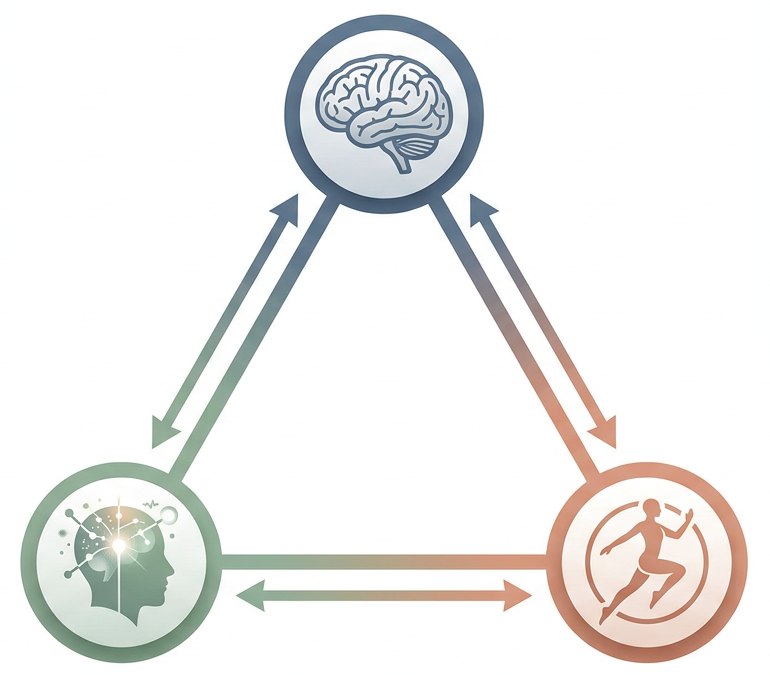
What we look at
We don't guess. We look at each of the areas research links to anxiety and mood, then focus on the ones that matter most for you.
Stress and the nervous system
When the stress response stays switched on, the body is primed for danger. You feel wired, tense and quick to react.
Blood sugar
Sharp rises and falls in blood sugar release adrenaline, which can feel just like anxiety, panic or sudden anger.
The gut–brain connection
The gut and brain talk constantly through nerves, hormones and the immune system. Gut problems often travel with anxiety and low mood.
Inflammation
Research links raised inflammation to depression and low motivation, and it can come from the gut, diet, infection or stress.
Nutrients
Vitamin D, B12, folate, iron, magnesium, zinc and omega-3 fats all play a part in making and balancing the brain's chemical messengers.
Hormones and thyroid
Thyroid problems, the menstrual cycle, perimenopause, menopause and low testosterone can all change mood and anxiety.
Brain function
A functional neurological assessment looks at how well the brain's calming and alerting systems are balanced.
Sleep and body clock
Poor sleep makes anxiety and low mood worse, and a disrupted body clock is closely linked to mood swings.
Daily habits
Caffeine, alcohol, cannabis, movement, daylight and screen time: small changes that often make a big difference.
How we assess your mood and anxiety
Three layers of assessment build a clear picture of how you feel, and why.
Mood profile and diary
Validated questionnaires used across the NHS, such as GAD-7 for anxiety and PHQ-9 for mood, plus a simple two-week mood diary to show your real pattern.
Functional neurological assessment
At your Full Consultation: an examination of the brain and nervous system, including the balance between the "alert" and "calm" systems.
Laboratory profiles
Only the tests your history points to, such as cortisol rhythm, blood sugar, thyroid, nutrients, inflammation, hormones or gut health. Quoted before anything is ordered.
Your results, in one plan
Everything comes together in a personal 12-week plan, with a questionnaire and mood diary baseline to measure progress against and a clear list of what to change first.
What to expect
Start with a free 20-minute conversation. Then, if you'd like to go ahead, each step builds on the one before, online or at the clinic in Macclesfield.
Start here
Discovery Consultation
Your story
- How and when your health changed
- Whole body brain profile
- Lifestyle Profile
- Past Labs Profile
- Stress Profile
- Medical and medication history
- Review of your mood and anxiety questionnaires and two-week mood diary
- The way forward
Full Consultation
Mood and anxiety: a root cause analysis
- Physical assessment
- Neurological assessment
- New labs deep dive
- Dietary deep dive
- Supplement deep dive
- A personal 12-week plan: nervous system, food, gut, sleep and daily rhythm
- Written report
- 14 days of follow-up messaging
- Free 8-week Brain Health Blueprint email series, exclusive to Full Consultation clients
Follow-Up Consultation
Keeping you on track
- Progress reviewed against your questionnaire and mood diary baseline
- What has improved, and what is still hard
- Your plan adjusted, step by step
- Supplement review, checked against any medication
- Liaison with your GP, psychiatrist or therapist
Talk to Alan, free, for 20 minutes
Tell us what you have been going through, and we'll tell you honestly whether we can help and what the first step would be. No cost, no pressure.
- By phone or video, at a time that suits you
- Get a sense of what might be driving how you feel
- Find out which consultation, if any, is right for you
Prefer to talk now? Call 07814 528087 or email alan@neurogenicsclinic.co.uk.

Alan Lee
Alan is a clinician, educator and researcher in functional medicine and functional neurology, with a special interest in functional and integrative psychiatry. He looks at mood and anxiety as part of the whole picture: brain, body and mind.
He works alongside GPs, psychiatrists, therapists and specialists to find what is driving how you feel, and turns it into a clear, practical plan.
Trained at: Institute for Functional Medicine · The Kharrazian Institute · Carrick Institute of Neurological Sciences · Association of Functional Nutrition and Lifestyle Medicine (CFN-S) · Psychiatry Redefined
More about Alan →Questions people ask
What happens in the free 20-minute conversation?
It is a relaxed phone or video call with Alan. You describe what you have been going through, he explains whether and how he can help, and you decide if you would like to book. There is no cost and no obligation.
Is this counselling or therapy?
No. We don't offer counselling or psychotherapy, and talking therapies such as CBT are often an important part of getting better. We look at what therapy doesn't: the brain, stress hormones, blood sugar, gut health, inflammation, nutrients, hormones and sleep. The two work well together.
Do you prescribe medication? Should I stop mine?
We don't prescribe, and we will never ask you to stop or reduce medication. Antidepressants, anti-anxiety medication and mood stabilisers should only ever be changed with your prescriber. If you would like to review your medication in future, that is a conversation for you and your doctor, and we can share our findings with them.
Can you help with bipolar disorder?
Yes, alongside your psychiatrist or mental health team, never instead of them. Bipolar disorder needs specialist psychiatric care. We look at the things that can make mood more or less stable, such as sleep and body clock, stress, blood sugar, inflammation and nutrition, and support the plan your psychiatric team already has in place.
Do I need a GP referral?
No. You can book directly. With your permission we will share a summary with your GP, and we will always tell you if something needs medical attention.
What if I am in crisis?
We are not a crisis service. If you feel unable to keep yourself safe, call 999 or go to A&E. For urgent mental health support call NHS 111 and press 2, or call Samaritans free on 116 123, any time. You can also text SHOUT to 85258.
How much does it cost?
The first 20-minute conversation is free. Discovery Consultation £125 (60 mins), Full Consultation £175 (90 mins), Follow-Up Consultation £95 (60 mins). Lab tests are optional and quoted separately, before anything is ordered.
Ready to feel more like yourself?
Find out what is driving how you feel, and what to change first.